click to begin
The Monarch Butterfly
The Monarch butterfly (Danaus Plexipuss) is a member of the Nymphalidae family and lives in North America. It is a milkweed butterfly because that is its primary food source, as an adult and a juvenile. The leaf of a milkweed plant is also where they lay their eggs and the caterpillars first eat.
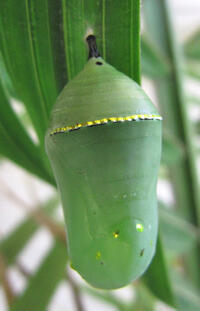
The caterpillar takes only about 2 weeks to get in their "J" formation, meaning they turn their bodies to form a J shape in order to form their chrysalis.
The Chrysali of monarchs hang from milkweed leaves and take about another 2 weeks to pupate and hatch, becoming a butterfly.
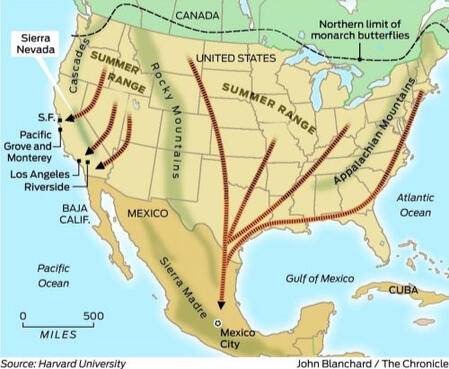
Almost as soon as monarchs get to their butterfly stage they migrate. Migration season is from September to October but can start earlier if the weather turns cold sooner. They can't survive the colder weather so they migrate to the south of North America. Once there they lay their eggs to start a new generation. Most wild monarchs live for 6 weeks, but cultivated ones live until the next spring.
click!
One of the largest threats to the monarch population is the use of pesticides on crops.
Most pesticides used for farms and plant nurseries use pesticides that include neonicotinoids.
Neonicotinoids are a chemical used in pesticides, this chemical while minimally harmless to humans, is very toxic to pollinators.
In addition to being toxic to Monarchs, it also increases the widespread loss of milkweed. The systemic chemicals seep into wherever it is applied and then soaks into what touches it after.
The easy application of neonicotinoids makes them a very popular insecticide.
The increased use of this chemical causes more danger for Monarchs and other pollinators.
The use of neonicotinoids is common around urban areas as well as rural, so once again the risk for Monarchs getting affected is even higher
Locally grown farms do not use pesticides due to the USDA's organically grown seal, to get one all produce has to be grown naturally without pesticides.
Most grocery stores buy their produce from large scale farms. Large scale farms use pesticides **find out here if your local grocery store supplies from pesticide using farms
Neonicotinoids contain multiple chemicals used in everyday gardening products such as;
Acetamiprid
Clothianidin
Dinotefuran
Imidacloprid
Nitenpyram
Thiocloprid
Thiamethoxan
Threats to Monarchs
There have been multiple threats to the monarch population. The population has been decreasing rapidly in recent years, so quick in fact that they are now considered an endangered species and are protected under the endangered species act.
click the links for different causes to monarch population decline
Pesticide using farm?
E. Miedema & Sons, Inc. - Meijer's main produce vendor, is a pesticide free farm
Kroger farms- A pesticide free farm
Aldi farms- Organically grown approval from the USDA, so no pesticides
The threats range from pesticide usage to climate change. Climate change and the increase in temperature around the globe has interfered with their migration pattern, their overwinter habitats have been under extreme weather conditions and monarchs being sensitive to weather, can't handle it.
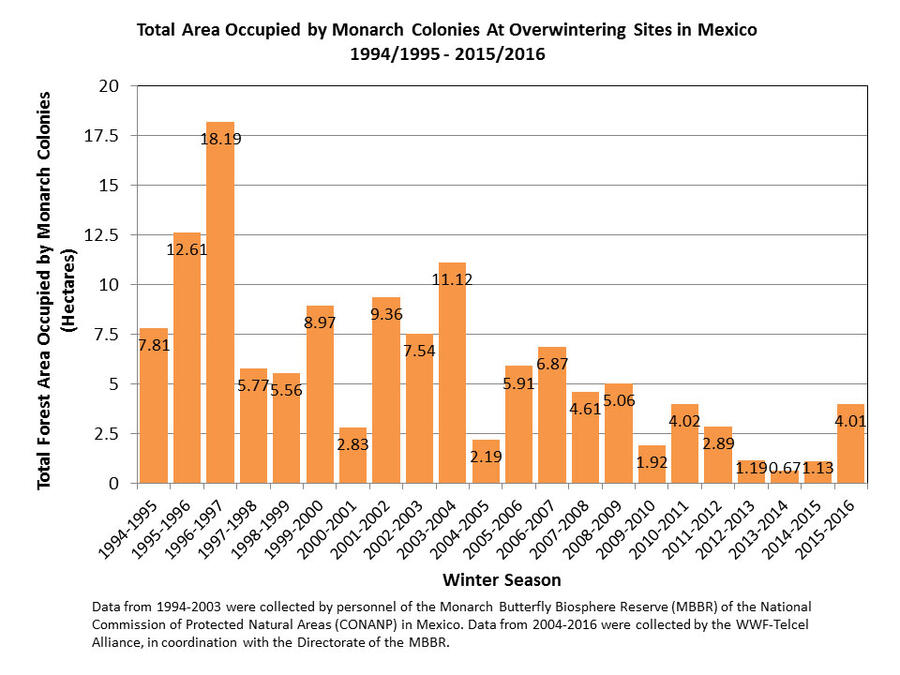
overwintering sites are just where monarchs roost for the winter, until they migrate again that spring
This graph provided by the U.S. Fish and Wildlife services shows the drastic population decline of Monarch butterflies
Habitat loss for Monarch butterflies is the cause for the most population decline in some states like Wisconsin. The destruction of their breeding grounds has caused a 90% loss according to a study done by the DNR in Wisconsin.
The increased expansion of the agricultural industry also cultivates milkweed, but the use of insecticide on cultivated plants harms Monarchs.
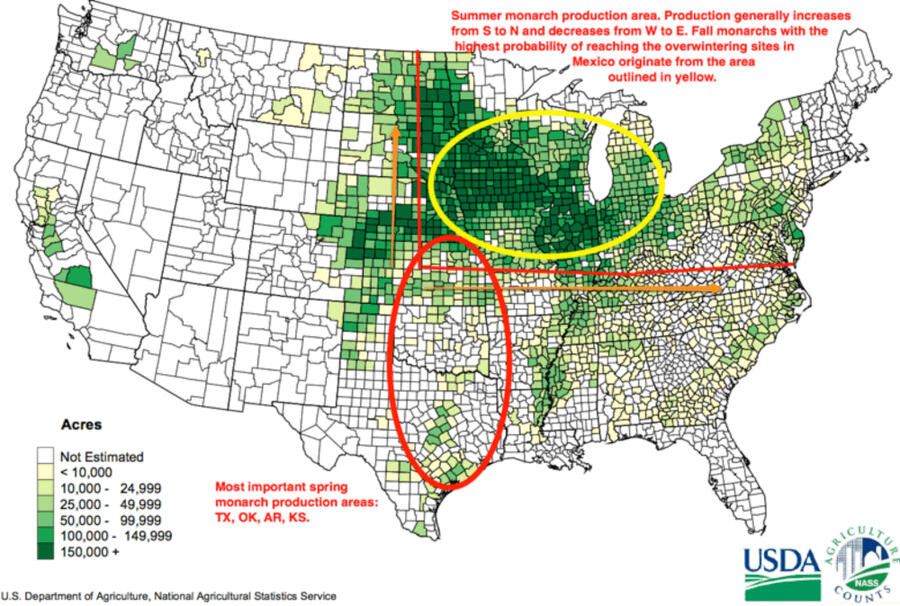
the map shows the breeding ground for monarchs and where milkweed, an essential plant to butterfly life grows. This map was made in 2014, in more recent studies, like the one done is Wisconsin (which was home to some of the largest and most heavily populated breeding grounds) has shown that that population has greatly decreased.
Milkweed is essential for monarch life, it provides multitudes of purposes. But as the same with the breeding grounds, habitat loss has caused a decline in the milkweed population.
Monarch caterpillars only eat milkweed
Butterflies extract milkweed nectar
Milkweed is toxic to humans!
https://www.consumerreports.org/fruits-vegetables/farmers-market-produce-local-vs-organic/
https://www.saveourmonarchs.org/why-milkweed.html
http://meijercommunity.com/sustainability/better-products/fresh-and-local/
https://www.aldi.us/en/grocery-goods/fresh-right-now/fresh-produce/organic-locally-grown/
https://monarchjointventure.org/monarch-biology/threats/pesticides
https://www.natureworldnews.com/articles/9277/20141001/power-behind-monarch-butterfly-migration-lies-in-a-single-genes.htm
https://dnr.wi.gov/news/Weekly/article/?id=4095
https://www.worldwildlife.org/pages/monarch-butterflies-and-climate-change